|
|
Microlight Flying - Frequently asked questions
- What happens if the engine quits?
It goes nice and quiet. We convert to a glider and listen to the wind whistling through the
wires whilst gliding gently down to a perfect landing in grassy field below to await retrieval
by the ground crew.
- Do the occupants wear parachutes?
No. Don't need them. They're very bulky. But a better way would be to have the parachute attached
to the aircraft. This way the whole lot comes down gently. But the only reason we'd need
one would be a mid-air collision and keeping a good lookout all the time ensures that this
doesn't happen.
- What sort of maintenance is done?
All our aircraft are kept in perfect working order with rigorous 25 hour maintenance schedules
for both airframe and engine by professional engineers who specialise in this type of work.
In addition, just like our cars have to be MOT'd, all microlight aeroplanes must undergo
a very detailed scrutiny once a year by BMAA approved Inspectors and then they're flown by
an independent Check Pilot ..... an experienced pilot also approved by the BMAA to undertake
such a task ..... to ensure that there are no abnormal flight characteristics. The aircraft
is then issued with a certificate from the Civil Aviation Authority called a Permit-to-Fly,
valid for a further 12 months.
Microlights - Myths & Facts
- MYTH ..... Microlight flying is dangerous.
FACT ..... So is driving. So is horse riding. So is swimming. In fact I'd go so far as saying
that those last three activities, are far more dangerous than flying and there are countless
other pursuits, that one could quite justifiably say, are much more dangerous than flying.
Ah! I hear you saying, but we didn't say 'flying', we said 'microlight flying'. I can well
understand your feelings on that score because way back in the prehistoric days of the early
eighties when microlights first became popular in the UK, there were no air-worthiness regulations
and no licensing requirements. This led to some dangerous aircraft being built and people tried
save money by teaching themselves to fly rather than by having proper instruction by trained
instructors ..... in fact there were hardly any trained instructors back then! It isn't surprising
therefore that there were a huge amount of accidents. Some of the aircraft were inherently
dangerous and some of the pilots were even more so. Of course, the media had a field day with
this and it soon became public knowledge that microlights were dangerous and the people who
flew them were madmen. A very nasty stigma.
It didn't take long though for the Civil Aviation Authority to step in and put the blocks on
all this mayhem. The whole weight of British aviation construction knowledge was applied to
microlight design from 1983 onwards as was the requirement for proper training and licensing.
Britain now leads the world on microlight air-worthiness standards for the aircraft and the
standards of training at some microlight schools now exceed that of many General Aviation schools.
But still the old stigma remains and probably will do for many years though the truth of the
matter is that microlight flying is no more dangerous than any other adventure sport .....
but like any other adventure sport, it has to be taken seriously and doesn't suffer fools gladly.
- MYTH ..... Microlights are hang gliders powered by lawnmower engines.
FACT ..... Do you know anyone who owns a 55 horsepower motor mower? I've got a Flymo motor
mower and that's powered by a 3.5hp Briggs & Stratton four-stroke single cylinder engine.
Some microlights now have 100hp engines!
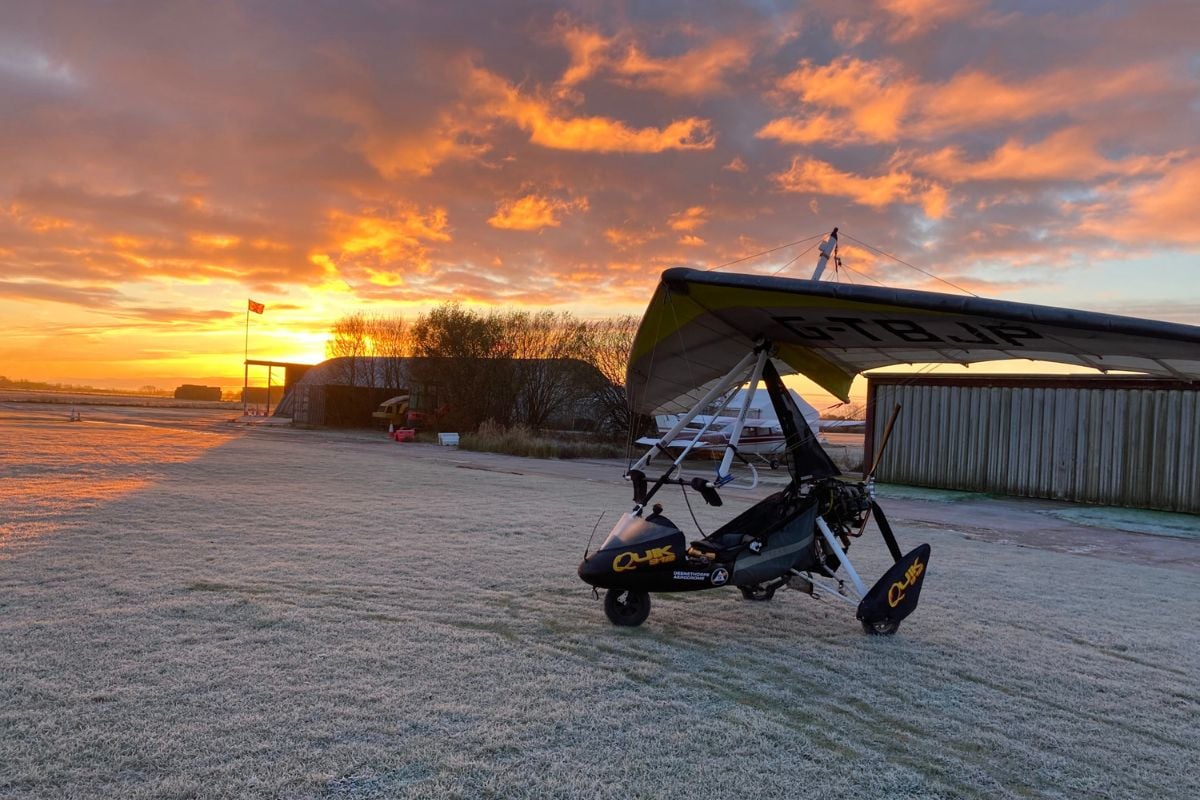
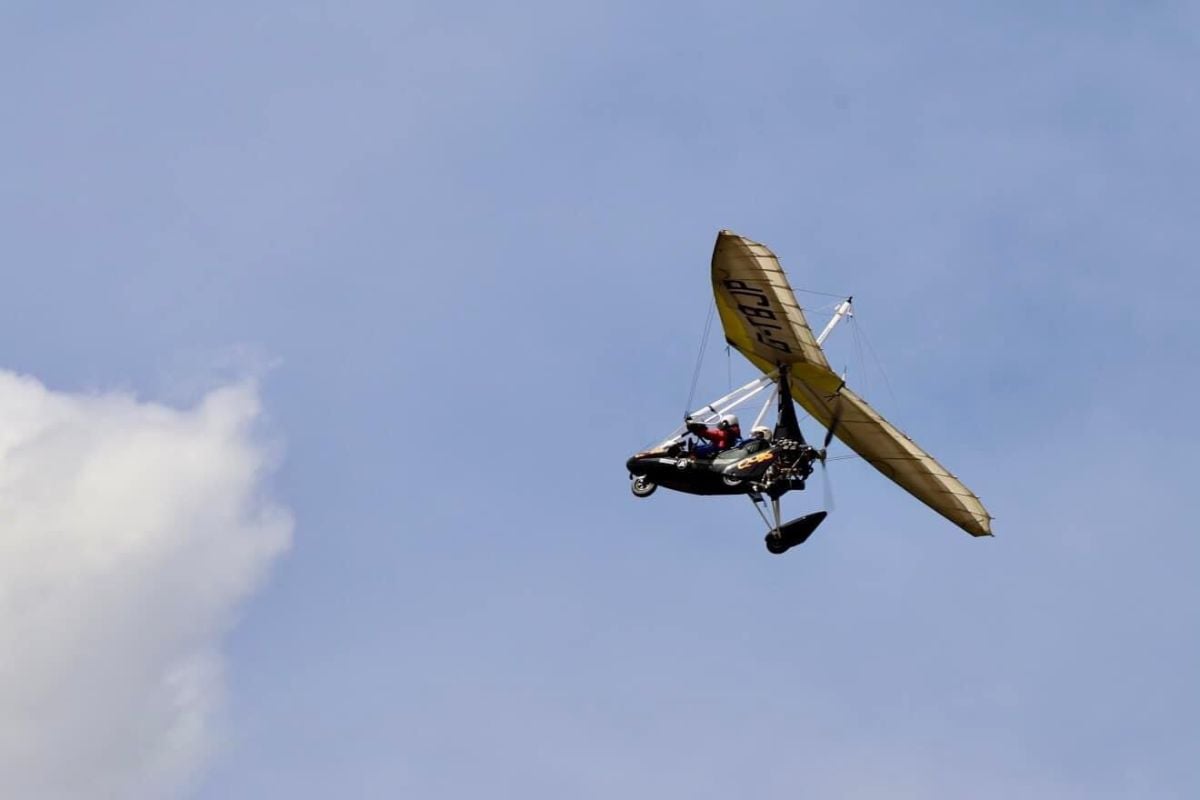
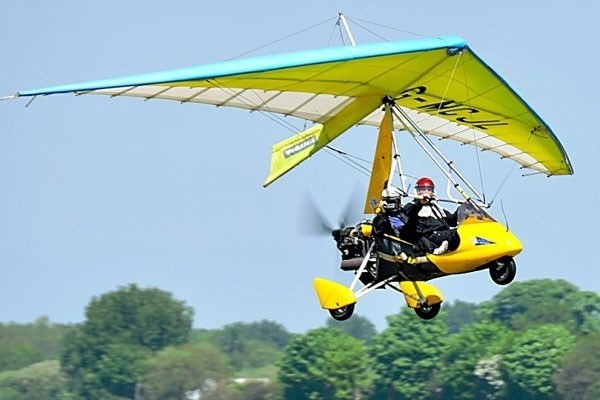
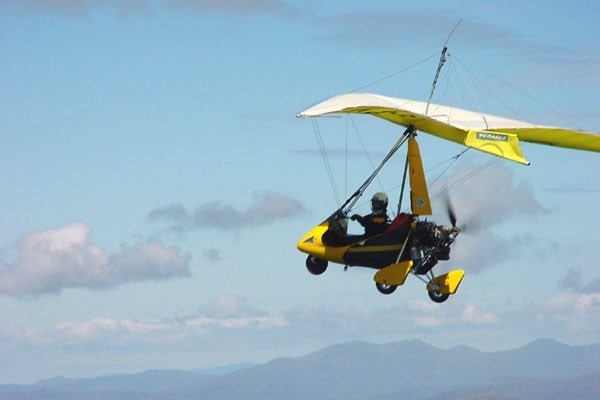
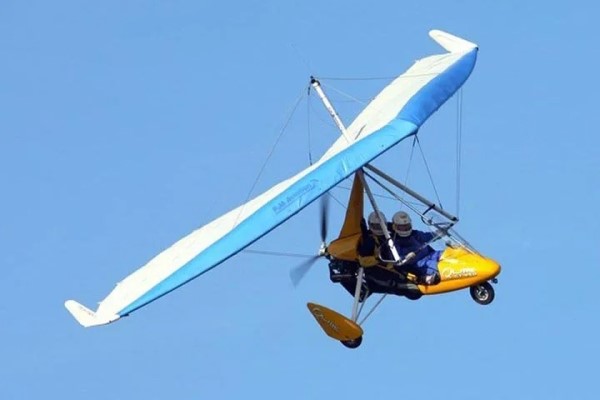
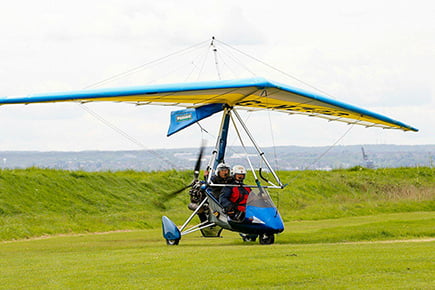
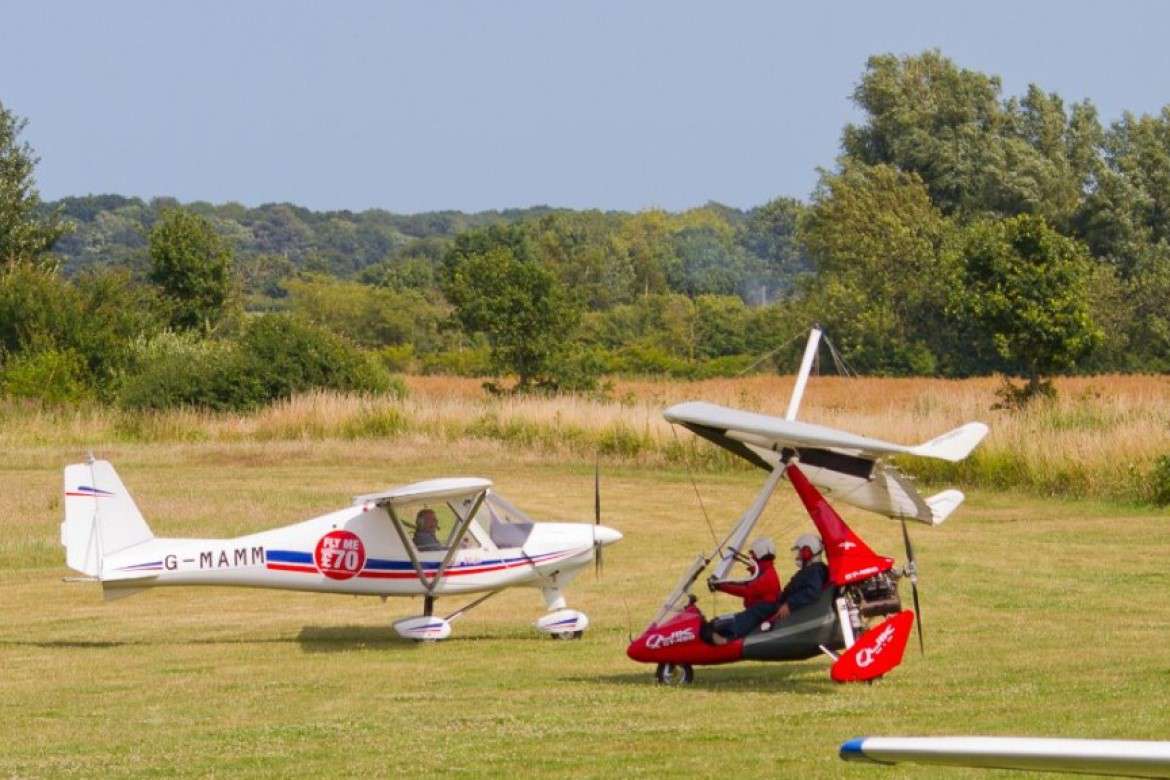
They're certainly not hang-gliders. Even the Flexwing designs - the ones with wings that look
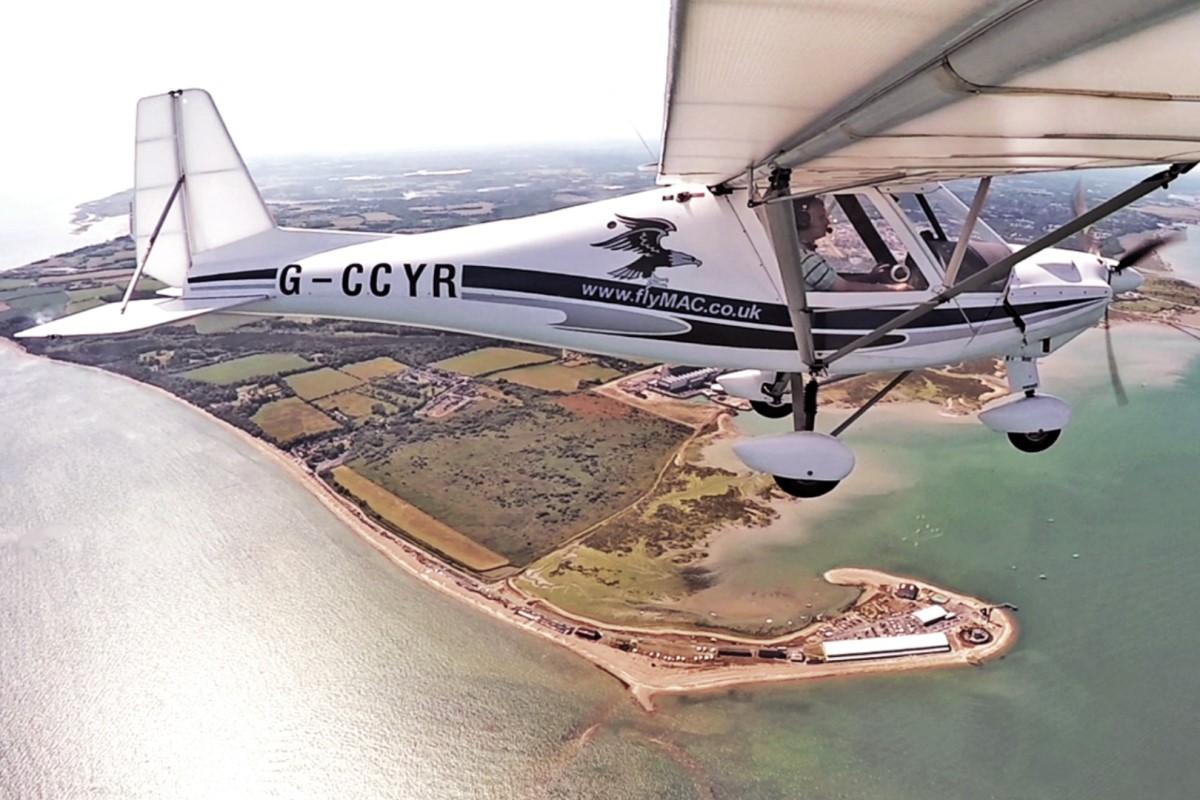
like hang-gliders - aren't hang-gliders. The truth is that all microlights, whether they're
Flexwing or Fixed-wing (the ones that look like normal aeroplanes) have developed from the
hang-glider technology of the seventies but that's where the similarity ends. The modern microlight
aircraft is a proper aeroplane and deserves the same high respect as any other aircraft type.
- MYTH ..... Microlights are very flimsy things.
FACT ..... Depends on the interpretation of 'Flimsy'. All aeroplanes are very flimsy things!
They have to be, otherwise they'd be too heavy to fly. But most microlights are, aerodynamically,
quite a bit stronger than the majority of small light aeroplanes.
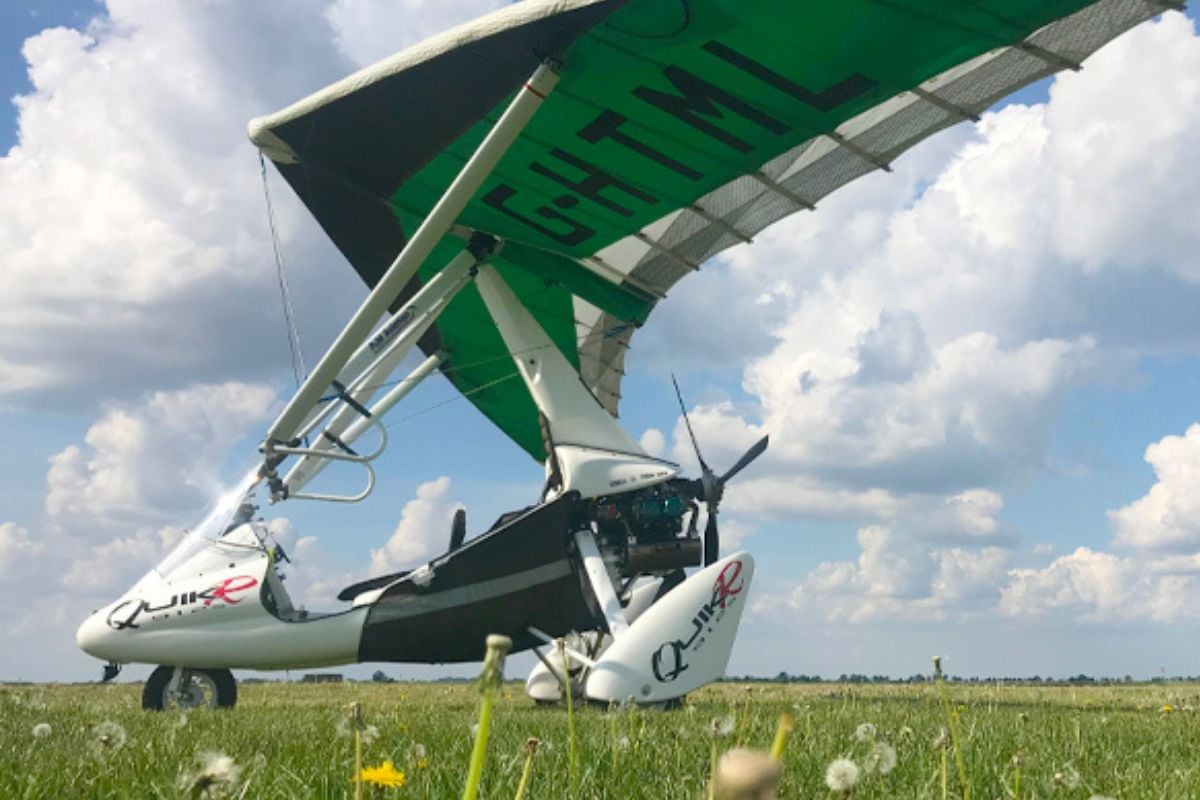
One of the main reasons why most microlights look flimsy is that their framework is exposed
..... just like the old string and rag aeroplanes were of yesteryear ..... whereas the modern
light aeroplanes are covered in a thin skin of aluminium sheeting or doped fabric which gives
them the appearance of being much more 'solid'.
- MYTH ..... You can't go very far in a microlight.
FACT ..... In 1986 a young lady by the name of Eve Jackson bought a microlight, learned to
fly it, got a Private Pilot's Licence (microlights) and then departed the UK ..... destination
..... Australia! Just how far is far? Distance is no longer a factor in microlight flying.
Pilots in the UK regularly travel by microlight to places like Spain, Holland, Germany, Denmark,
France ..... and only a couple of years ago, one intrepid microlight pilot flew to Beijing
in China.
Microlights are just like any other vehicle. They run out of fuel now and then so you have
to put more fuel in the tank occasionally. Now it's not very practical to land on a garage
forecourt ..... though it has been done and in the very old days it was quite normal to land
in a field close to a garage, remove the tank, fill up and be on your way ..... so you simply
do what all aeroplanes do and land at an airfield on the way that sells fuel.
- MYTH ..... Microlights are very slow.
FACT ..... There's a new microlight which is available in kit form now that cruises at 175mph.
Now in light of the fact that a Cessna 150 cruises at about 90mph would we call that exactly
'slow'?
True, in the early days the very early microlights cruised around at around 25 to 30mph. The
average cruise speed now is between 40 and 80mph. And anyway, the whole essence of flying is
to enjoy the scenery while you're up there. Speed brings with it some undesirable disadvantages.
One of which is that you need a streamlined, sleek design that you have to be cocooned inside
rather than be able to experience the breeze blowing through your hair.
|
|
 |